WELLINGTON H2A:
heritage & arts alive
We love to celebrate the town's character through events like the Midsummer Fayre, but we also work to safeguard and enhance that character in terms of the town's built environment. The centre of Wellington has been a conservation area since the early 1980s, but unfortunately that was too late to stop some big town planning mistakes, the legacy of which blight the town today. We want to ensure that all future planning is thoughtful, imaginative and serves to enhance the town's historic core rather than damage it. To that end, we lobby and work with the local authority to challenge some of their built environment activities in Wellington, always seeking to offer alternative suggestions instead of just complaining.
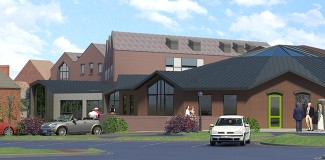
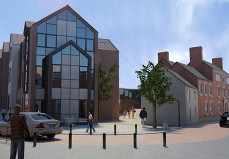
When plans were first presented for a new civic quarter in Wellington, H2A prepared a response and pressed the borough council for improvements to the design. Our report was discussed at a meeting with councillors and officers of the council, and heavily influenced the changes that have since been made to the design. H2A was impressed by the way in which the council listened to our design recommendations, and continues to work with the council as the plans come to fruition.
Much of our input on urban design issues is rooted in our commitment to ensuring that all development in Wellington respects and responds to its historic context. That doesn't mean it has to be weak pastiche which 'pretends to be old', but that it needs to dovetail with the townscape around it. In the context of the civic development, we argued that this meant pitched rooves rather than flat ones, brickwork and fenestrations that echo the shapes and materials of surrounding buildings, and walkways that meander and 'reveal' vistas rather than bullet-straight 'boulevards' as originally envisaged. All these considerations have now been reflected in the revised plans.
H2A has also prepared material to inform the council's £1.3 million re-design and repaving of the Market Square and New Street.
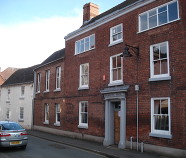
When initial plans for the civic quarter proposed the demolition of 18th century Edgbaston House, H2A led a campaign to have it saved. Our Facebook group attracted almost 200 members, and councillors have since agreed the buildings should be retained. H2A is always keen to campaign 'positively' rather than negatively, and to present alternative ideas for things we disagree with. As part of our campaign around Edgbaston House, we made the case for why its retention would be of benefit to the civic quarter development and how the building could be maximised as an asset to the town.
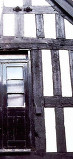
Investigation into the buildings' interior has since revealed rare period features - and found that the white end section dates to the 14th century, when it was occupied by trademen engaged in the town's tanning industry.
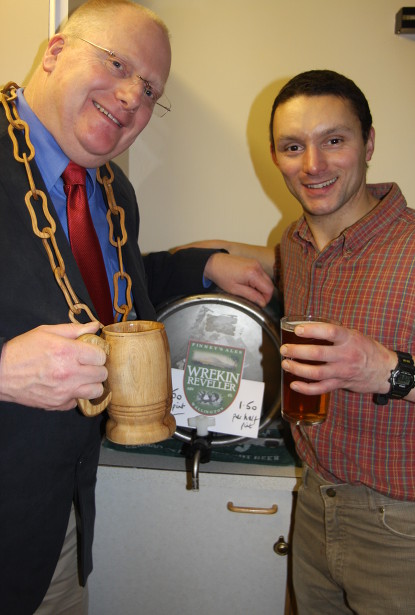
H2A is always looking for fun and interesting ways to promote the town and show that it is somewhere distinctive. Our research about the town brought to light the ale tasters, who were appointed annually in the manor court in the Market Place, until the 1700s. Whilst their role then was to make sure beer wasn't watered down, we thought the post could be revived as a way of promoting local food and drink, both to local retailers and shoppers. The town's market, as de-facto inheritors of the market charter, took up our idea and appointed Wellington's first Ale Taster in over 200 years in September 2009, following a contest in the grounds of the Market Hall.
THE RETURN OF THE ALE TASTER
URBAN DESIGN & ENVIRONMENT

LIKE WELLINGTON on